Apostille for a Certificate of Naturalization or Citizenship
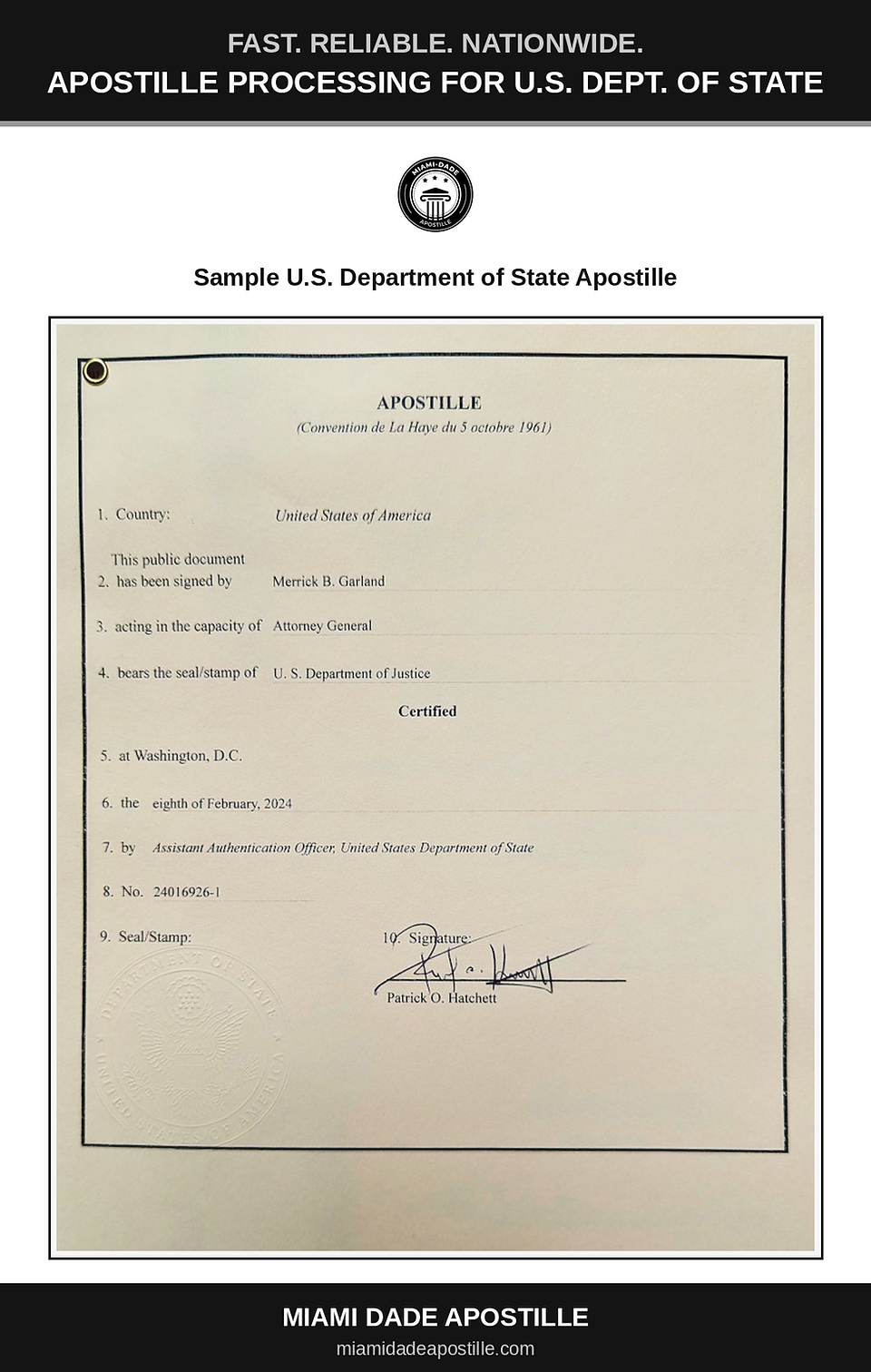
When a Certificate of Naturalization or Certificate of Citizenship issued through U.S. Citizenship and Immigration Services must be used outside the United States, the first question is not simply, “Where can I get an apostille?” The better question is: who issued the document, whose signature appears on it, and which authority can authenticate that signature? That distinction prevents a common and expensive mistake—sending a federal record to a state apostille office.
This document is commonly requested for dual-citizenship applications, civil registration abroad, inheritance, marriage, residency, and proof of U.S. citizenship in a foreign proceeding. Depending on the destination, the recipient may ask for an apostille, an authentication certificate, a certified copy, a translation, or a combination of these. The terms are related, but they do not mean the same thing.
What is this federal document?
USCIS issues naturalization and citizenship certificates. When a naturalized citizen needs a copy for U.S. Department of State authentication, USCIS guidance describes obtaining a certified true copy through a local USCIS office after presenting the original and identification.
The correct underlying record must be obtained before authentication begins. An apostille does not repair an unofficial copy, add a missing certification, or verify that the document’s contents are true. It authenticates an eligible public signature, the signer’s official capacity, and, when applicable, the seal or stamp on the record.
Which authority handles the apostille?
After the proper USCIS certification is obtained, the federal authentication route generally leads to the U.S. Department of State Office of Authentications. A state notary’s copy certification is not a replacement for USCIS certification of this federal record.
How to prepare the document
- Ask the foreign receiving authority exactly which citizenship record it accepts.
- Follow current USCIS instructions to request a certified true copy; bring the original certificate and government identification if an in-person review is required.
- Protect the original certificate and never surrender it unless an authorized agency specifically requires it.
- Confirm the destination country’s Hague status and translation requirements.
- Submit the USCIS-certified copy through the appropriate federal authentication process.
Apostille or authentication certificate?
For a destination that participates in the 1961 Hague Apostille Convention for the requested use, an apostille is generally the relevant certificate. For a non-Hague destination, a federal authentication certificate and additional embassy or consular legalization may be required. The receiving agency should confirm what it accepts for the specific transaction.
Common mistakes to avoid
- Notarizing a photocopy and assuming it becomes a federally certified record.
- Mailing the original naturalization certificate to an unauthorized service or foreign recipient.
- Confusing a U.S. passport with a naturalization certificate.
- Using outdated appointment instructions without checking the current USCIS process.
Do translations need an apostille?
A translation and the underlying federal document are separate items. Some foreign authorities accept a certified translation; others require a translator’s affidavit, notarization, or a translation completed in the destination country. Apostilling a translator’s notarized statement authenticates the notarization—it does not turn the translation into the original federal record. Confirm the destination’s language rules before documents are attached or separated.
Get help with your federal apostille
Federal authentication can involve agency-specific certification, document review, federal submission requirements, translation coordination, and international delivery. Reviewing the document before filing can prevent rejection caused by the wrong version, a missing signature, the wrong authentication office, or a destination-country mismatch.
Need help with a naturalization certificate apostille? Contact Miami Dade Apostille for document review, federal apostille and authentication coordination, certified translation support, and secure domestic or international return delivery. Send us a clear copy for review before mailing the original. Learn more about our naturalization certificate apostille service.
Ready to get started?
Miami Dade Apostille handles federal apostille coordination, certified translations, and international delivery. Send us a clear copy for review before mailing the original.